


Liverpool's 10 Greatest Right-Backs in History

Updated: 4 days ago
Liverpool's 10 Iconic Right-Backs in History
Watch a Liverpool match closely enough, and the right-back begins to reveal himself. He appears in recovery runs that prevent danger before supporters recognise it.
He provides width when the midfield becomes crowded, offers another passing option and, increasingly, can become an important source of attacking creativity. At Liverpool, the position has rarely been decorative. It has demanded awareness, stamina, defensive discipline and a willingness to take responsibility.
Across different generations, the role has changed considerably. Some right-backs were primarily defenders, while others became increasingly influential in possession and attack.
What connects the greatest of them is the same basic quality: control of the right side of the pitch.
So, who are the greatest right-backs in Liverpool's history?

The 10 Best Liverpool Right-Backs of All Time
This ranking considers overall ability, longevity, consistency, major honours, importance to successful Liverpool teams and the player's influence from the right-back position.
The comparison also takes different eras into account. A full-back playing in the early 20th century had very different responsibilities from the modern attacking right-back.
10. Steve Finnan
Steve Finnan was one of the most dependable right-backs of Liverpool's modern era. The Republic of Ireland international arrived at Anfield after establishing himself in English football and quickly became a reliable member of the Liverpool defence.
His style was based on positioning, concentration and sensible decision-making rather than constant attacking adventure. That made him a natural fit for a Liverpool side that placed considerable importance on defensive organisation.
Finnan was part of the team that won the Champions League in 2005, including the remarkable comeback against AC Milan in Istanbul. He also contributed to Liverpool's run to the 2007 Champions League final.
His Liverpool career produced 217 appearances, and although his attacking numbers were modest, his consistency made him a trusted figure during one of the club's most important periods in European competition.
9. Tommy Lucas
Tommy Lucas was another long-serving defender whose career stretched across the years between the two World Wars. He spent more than a decade with Liverpool and made 366 appearances for the club.
Lucas could operate in either full-back position and was part of the team that won the First Division title in 1921–22. His career was marked by periods in and out of the side, but he repeatedly fought his way back into the first team.
That persistence was particularly evident during the late 1920s and early 1930s. Lucas even became one of the club's ever-present players during the 1930–31 league campaign, showing the durability that helped him remain relevant for so long.
He belongs on this list because he represents the longevity and adaptability required of defenders during Liverpool's formative decades.
8. Ephraim Longworth
Ephraim Longworth was one of the important defensive figures in Liverpool's early history. His Liverpool career stretched across the period before and after the First World War, giving him a place in a very different version of the club.
Longworth was more than a defender. He became a senior figure within the team and later continued his association with Liverpool after his playing career ended. His importance was reflected by his role in the sides that won consecutive First Division titles in 1921–22 and 1922–23.
At a time when detailed statistics and tactical records were far less comprehensive than they are today, longevity and responsibility provide important clues to a player's value.
Longworth's place on this list therefore reflects both his defensive contribution and his importance to one of Liverpool's strongest teams of the early 20th century.
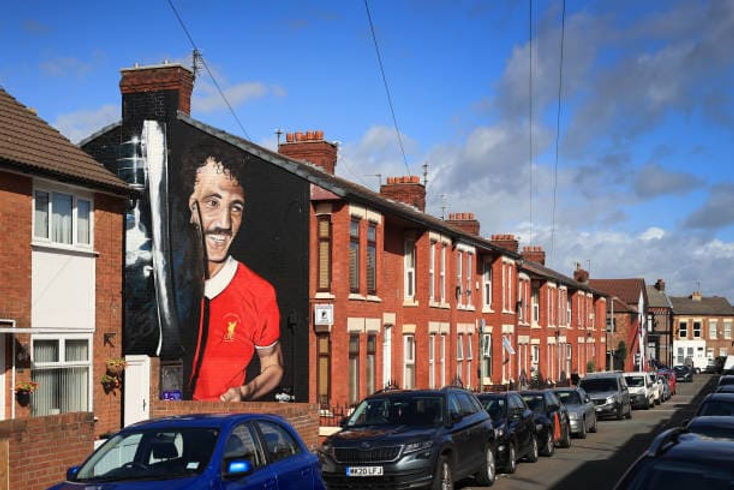
7. John Molyneux
John Molyneux was a powerful and reliable right-back who spent seven years at Liverpool. Signed from Chester in 1955, he quickly established himself as a regular and went on to make 249 appearances for the club.
Molyneux was known for his tough tackling and defensive strength. He was not a glamorous player, but his ability to hold his position and compete with opponents made him an important part of Liverpool's team during the late 1950s and early 1960s.
He also remained involved after Bill Shankly arrived as manager. Molyneux was part of the side that won promotion back to the First Division in 1961–62, although his opportunities became more limited as Shankly reshaped the team.
His Liverpool career is a reminder that important defenders do not always need spectacular attacking numbers. Sometimes reliability is the quality that matters most.
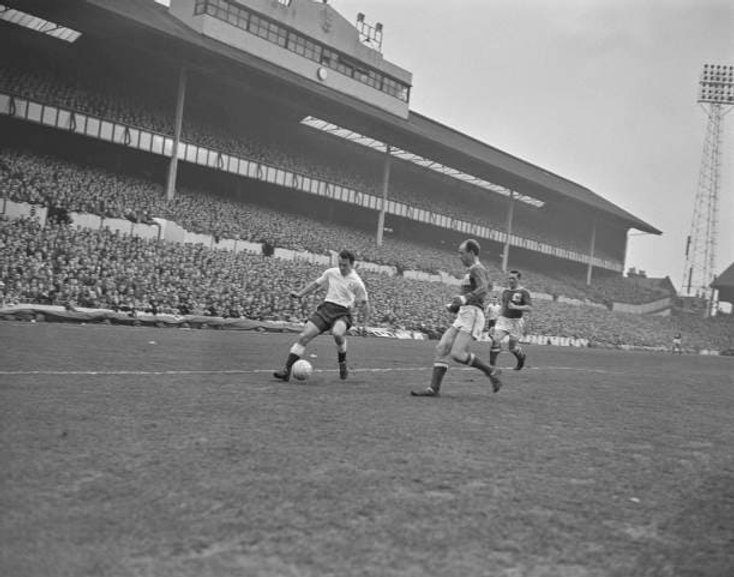
6. Ray Lambert
Ray Lambert represented Liverpool during a very different period of the club's history. He joined the first team after the Second World War and became an important member of the side that won the 1946–47 First Division title.
Lambert made 342 appearances for Liverpool and could operate on either flank, although he became particularly associated with the full-back positions. His game was built around reliability.
He was not a player who needed to dominate attention. His job was to defend his area, maintain the shape of the team and give his teammates a dependable presence behind them.
Lambert averaged more than 30 Football League appearances per season during his main decade at Anfield, underlining his consistency. He also remained with the club through a difficult period that eventually ended in relegation in 1954.
His career therefore covers both one of Liverpool's major post-war successes and one of its more difficult periods.
5. Rob Jones
Rob Jones had a shorter Liverpool career than most of the players above him, but his peak was good enough to earn a place among the club's greatest right-backs.
Signed from Crewe Alexandra in 1991, Jones was thrown straight into a difficult first-team debut against Manchester United at Old Trafford. The match finished goalless, but Jones impressed enough to be named man of the match. His athleticism was one of his biggest strengths.
Quick across the ground and strong in one-on-one situations, Jones was particularly effective when asked to defend against dangerous wide players. He also won the FA Cup in 1992 and the League Cup in 1995, making 243 appearances for Liverpool.
Unfortunately, recurring injury problems eventually restricted his career and contributed to his retirement at only 28. That makes his achievements even more impressive. Jones may not have had the longevity of Neal or Nicol, but during his best years he was one of the finest right-backs in English football.

4. Chris Lawler
Chris Lawler was one of the most dependable right-backs of Bill Shankly's Liverpool. Known as the "Silent Knight", Lawler combined defensive intelligence with an unusual ability to score goals.
He made 549 appearances and scored 61 goals for Liverpool, making him one of the club's highest-scoring defenders. Lawler's attacking numbers were remarkable because they were not built around penalties or free-kicks. He simply had an excellent instinct for arriving in dangerous positions.
His decisive goal in the 1965 FA Cup final helped Liverpool win the competition for the first time, while he later collected league titles and UEFA Cup honours. His consistency was equally impressive.
Between 1965 and 1973, Lawler missed only three league matches, underlining the reliability that made him such an important part of Shankly's teams. He was not flashy, but he understood the position and rarely allowed his side to lose its defensive balance.
3. Trent Alexander-Arnold
Trent Alexander-Arnold changed the way the right-back position could be used at the highest level. A product of Liverpool's academy, he developed from a midfielder into a right-back and quickly became one of the most creative players in the position.
His crossing, passing range and set-piece delivery turned the right side of Liverpool's attack into a major source of chances.
Alexander-Arnold finished his Liverpool career with 354 appearances and 23 goals, winning two league titles, the Champions League, the FA Cup, two League Cups, the UEFA Super Cup and FIFA Club World Cup.
His attacking numbers were extraordinary for a defender. He provided 12 Premier League assists in 2018–19 before raising the record to 13 the following season, when Liverpool won their first league title in three decades. There was more to his game than assists, though.
Alexander-Arnold helped redefine what Liverpool expected from the position. He could switch play from deep, deliver dangerous crosses, create chances and influence matches without necessarily leaving the defensive line in the traditional manner.
His Liverpool career eventually came to an end, but his impact on the position remains.
Few right-backs have changed the attacking possibilities of the role as dramatically.

2. Steve Nicol
Steve Nicol was one of the most versatile defenders Liverpool have ever produced. Signed from Ayr United, the Scot initially had to challenge Phil Neal for the right-back position.
Instead of waiting for an opening, he established himself in several positions and became indispensable to Liverpool's great teams of the 1980s.
Nicol made 468 appearances and scored 46 goals for the club, winning four league titles, a European Cup and three FA Cups. His ability to operate at right-back, left-back, centre-back and even further forward gave Liverpool enormous tactical flexibility.
That versatility never came at the expense of quality. Nicol was an accomplished defender, an energetic runner and a surprisingly effective goalscorer.
He even won the Football Writers' Association Footballer of the Year award in 1989 after an outstanding season in which he filled several different positions.
Liverpool's right-back tradition contains some exceptional specialists, but Nicol's ability to influence games from almost anywhere makes his career particularly impressive.
1. Phil Neal
Phil Neal stands as the benchmark against which Liverpool right-backs are measured. Signed from Northampton Town in 1974, Neal became one of the most reliable players in Liverpool's history and a central figure during the club's dominant period under Bill Shankly and Bob Paisley.
He made 650 appearances for Liverpool, scored 59 goals and won an extraordinary 18 major honours. That included eight league titles and four European Cups. Consistency was Neal's defining quality.
He rarely looked spectacular for the sake of it, but managers knew exactly what they would get from him. Defensively disciplined, composed under pressure and capable of contributing in attack, he became an almost permanent fixture on Liverpool's right.
His durability was equally outstanding. Neal played 417 consecutive matches for Liverpool between 1976 and 1983, an extraordinary run that tells us almost everything about his reliability.
He also scored in European Cup finals, including the penalty that helped Liverpool beat Roma in the 1984 final. Liverpool have had more attack-minded right-backs, but few have combined consistency, longevity and silverware as effectively as Neal.
Liverpool's 10 Greatest Right-Backs Ranked
Rank | Player | Liverpool appearances |
1 | Phil Neal | 650 |
2 | Steve Nicol | 468 |
3 | Trent Alexander-Arnold | 354 |
4 | Chris Lawler | 549 |
5 | Rob Jones | 243 |
6 | Ray Lambert | 342 |
7 | John Molyneux | 249 |
8 | Ephraim Longworth | — |
9 | Tommy Lucas | 366 |
10 | Steve Finnan | 217 |
The ranking considers overall contribution to Liverpool rather than appearances alone.
RELATED ARTICLES:


Comments